This Central America trip visits Mexico, Guatemala and Honduras.
Natural beauty
These countries are rich in nature: beautiful tropical jungles with all kind of wildlife. Hidden in some jungles are magnificent Maya ruins. There are also amazing lakes with volcano’s like Lake Atitlan, rivers like the Rio Dulce and majestic waterfalls like Agua Azul and Misol Ha. And not to forget fine beaches with an azure-blue sea and coral riffs.
This collage gives an impression of all this natural beauty. You can click on it to see it enlarged. In the slideshow below you can see many more photos.
Old colonial cities
There are several old colonial cities in Mexico and Guatemala, great places to dwell through the old streets and marvel at the splendid churches and other old buildings. The central plaza is mostly very lively with music and restaurants around. Especially in the evening and night you will feel enchanted by the relaxed atmosphere.
My favourite cities are Campeche, San Cristobal and Antigua.
The colourful Indian and Mayan people
Last but non least the colourful Indian and Mayan people. The today’s Mayas have an peculiar blend of Christian beliefs and their old traditions. Like ritual slaughter of chickens in their church, sometimes filled with strange saints and their own folk saint Maximon.
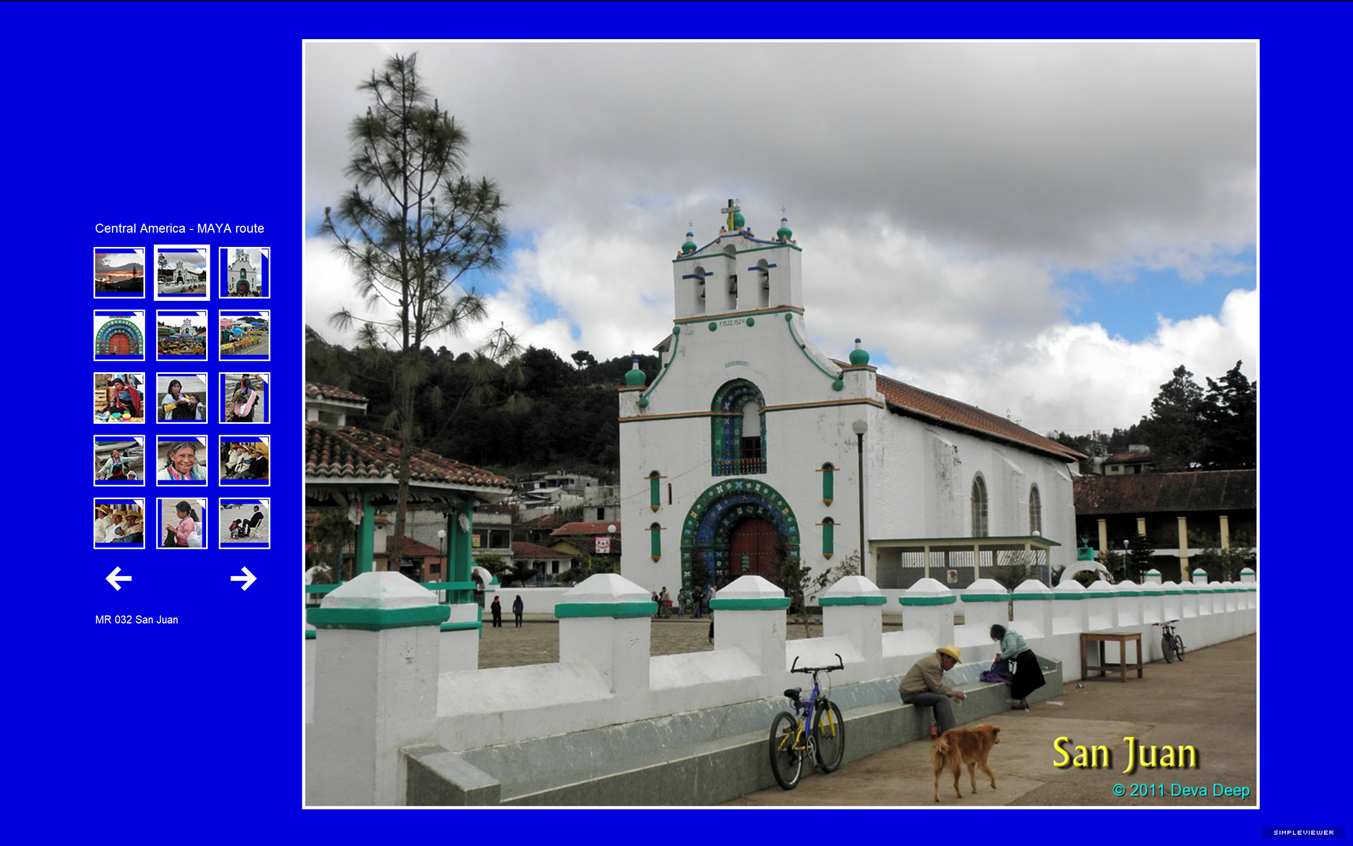
Highlights for me were San Juan and Chichicastenango with their alluring markets..
Again this collage gives a colourful impression and you can see in the 183 photos the whole journey.
The Mayas
The Maya is a Mesoamerican civilization, noted for the only known fully developed written language of the pre-Columbian Americas, as well as for its art, architecture, and mathematical and astronomical systems. Initially established during the Pre-Classic period (c. 2000 BC to 250 AD), according to the Mesoamerican chronology, many Maya cities reached their highest state of development during the Classic period (c. 250 to 900 AD), and continued throughout the Post-Classic period until the arrival of the Spanish.
The Maya civilization shares many features with other Mesoamerican civilizations due to the high degree of interaction and cultural diffusion that characterized the region. Advances such as writing, epigraphy, and the calendar did not originate with the Maya; however, their civilization fully developed them. Maya influence can be detected from Honduras, Guatemala, Northern El Salvador and to as far as central Mexico, more than 1,000 km (620 mi) from the Maya area. Many outside influences are found in Maya art and architecture, which are thought to result from trade and cultural exchange rather than direct external conquest.
The Maya peoples never disappeared, neither at the time of the Classic period decline nor with the arrival of the Spanish conquistadores and the subsequent Spanish colonization of the Americas. Today, the Maya and their descendants form sizable populations throughout the Maya area and maintain a distinctive set of traditions and beliefs that are the result of the merger of pre-Columbian and post-Conquest ideas and cultures.
Release date
2011
Source
https://www.asia-pictures.net/central_america_-_mayas.htm
Central America – MAYA route photos screenshots